Donna, guerriero e essere soprannaturale (en)
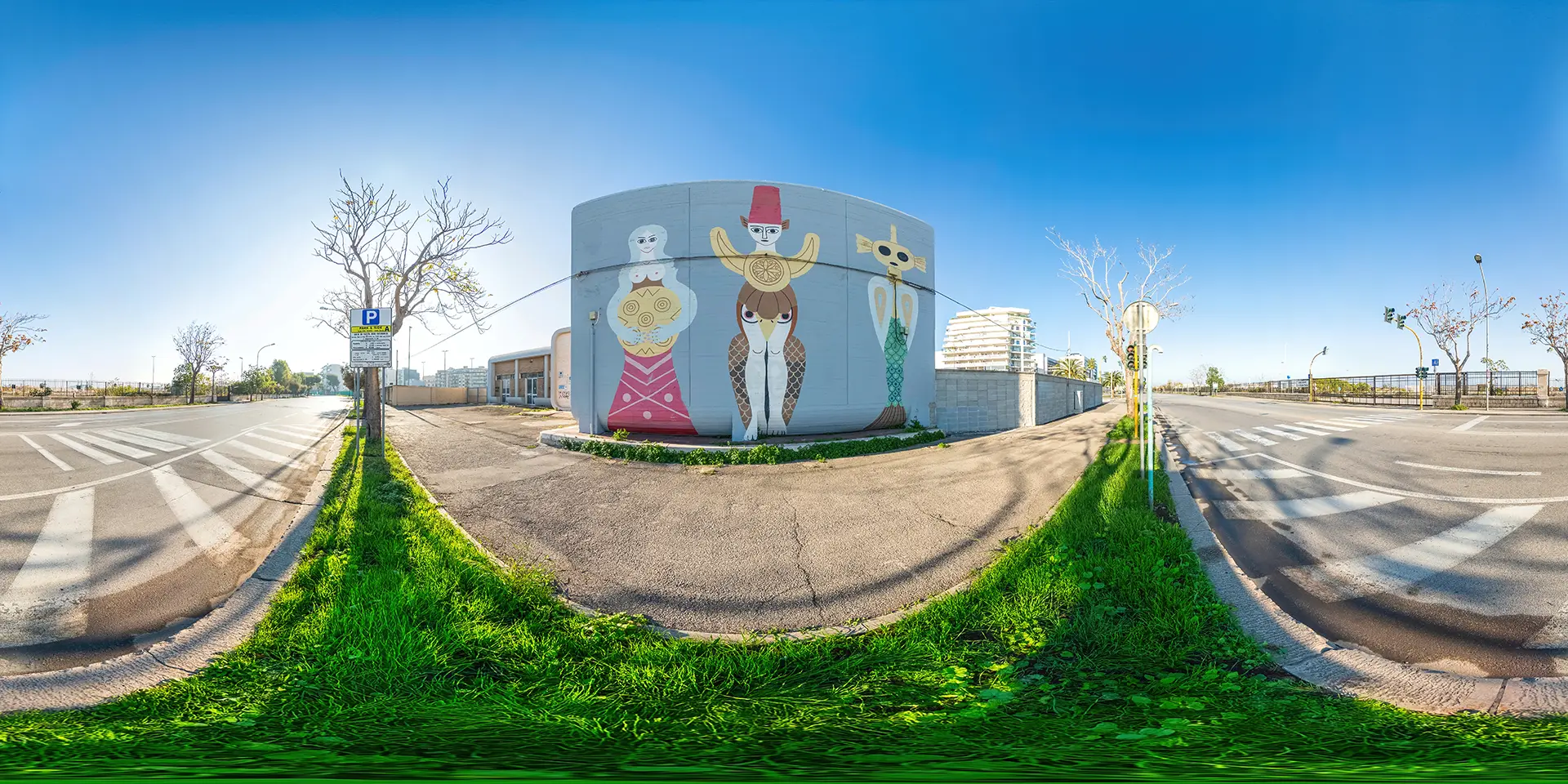
What are these three giants observing?
What are these three giants observing? It is the Adriatic Sea, stretching out in front of the wall where the Italian artist Dem decided to shape them. It is the same sea that gave life and culture to the civilizations that colonized Apulia before the Romans: the Peucetians, the Iapygians, the Messapians, and the Daunians, whose respective ancient imaginaries seem to blend into the colorful trio—made up of a female figure, a male figure, and a kind of mythological being, an aquatic creature.


A terracotta figurine from 400–300 B.C. served as inspiration for the female figure, while a selection of Daunian steles provided the basis on which the artist gave a face to the male figure, also drawing inspiration for the motif of the “flower of life.” The mythological animal, a creature of the depths, is instead an original invention by Dem: a “powerful” being modeled after the Nommo, aquatic spirits half-fish, half-deity, worshipped by the Dogon people (Mali, West Africa), and known under different names in other civilizations, including the Assyrians, the Hopi, and the Aboriginal peoples. This third element is emblematic of the spirit and purpose of this work: given its particular position in the Mediterranean, Apulia has always been a crossroads of peoples and a landing place for seafarers, from its most ancient history to the eras marked by the cult of Saint Nicholas, up to the arrival in Bari, in 1991, of the ship Vlora loaded with Albanian refugees. Apulia is a bridge to the Balkans, a gateway to the East, and these strange, imaginary, multicultural, and timeless figures seem to welcome foreigners arriving from the sea, offering them a glimpse of the multifaceted and hospitable culture of their new home.
Virtual Tour: Donna, guerriero e essere soprannaturale, DEM
 View it in Augmented Reality
Artista